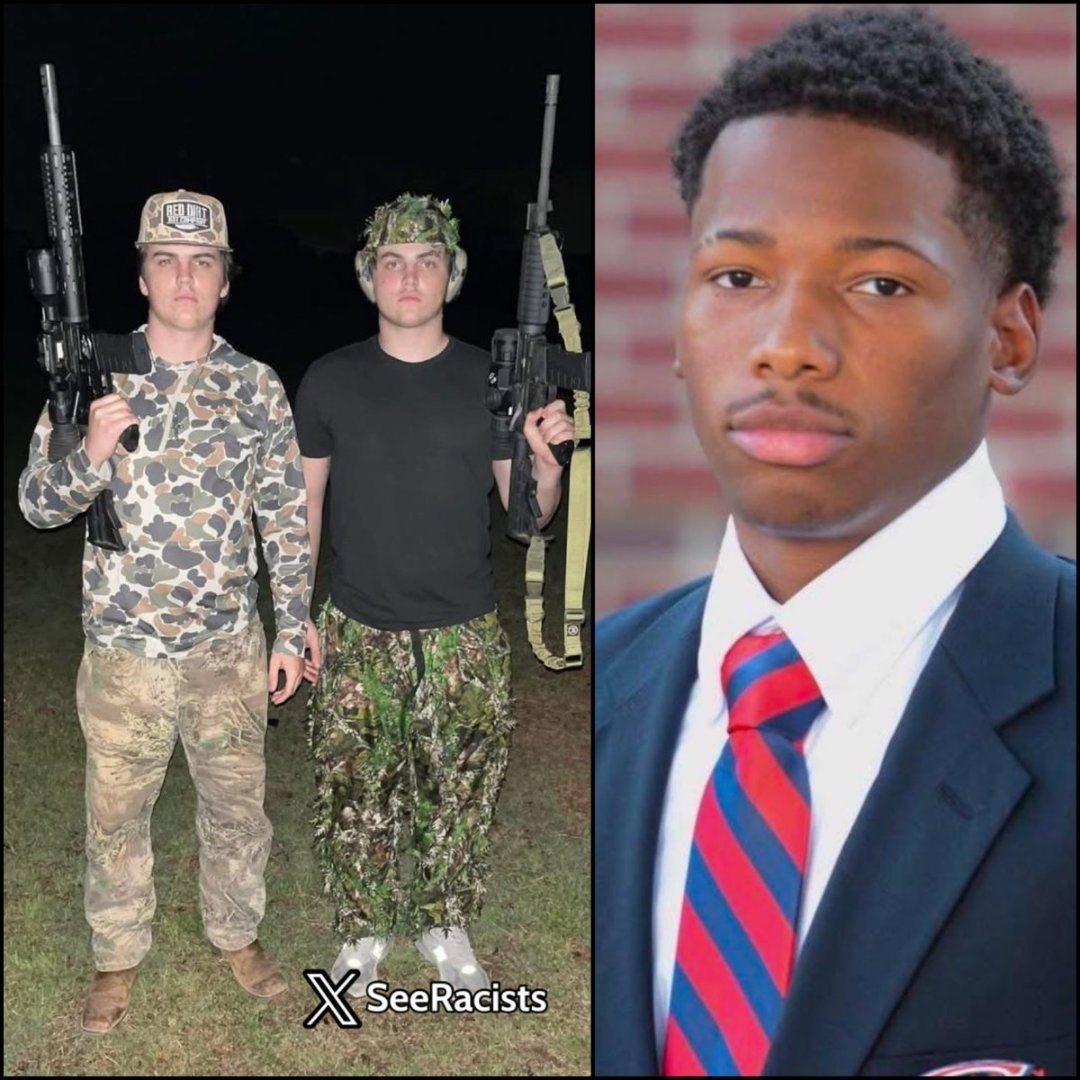
In a Collin County courtroom this week, during a hearing on Karmelo Anthony’s motion for a new trial, the defense presented more than 20 pages of previously withheld material about Austin Metcalf’s behavioral history.
The disclosures have reignited debate over what the jury that convicted Anthony of murder in June 2026 was allowed to hear—and what it was deliberately kept from knowing.
According to court records discussed at the hearing and reported by multiple outlets including KERA News, CBS Texas, and the Dallas Morning News, Austin Metcalf and his twin brother Hunter were once caught spray-painting graffiti that included “KKK,” “Kill all Black people,” the N-word, “Heil Hitler,” and an upside-down cross.
The brothers received 12 months of juvenile probation in Denton County.
When questioned by authorities, they reportedly described the act as “some dumb stuff” and “some vandalism.”
The same records detailed multiple documented instances in which Austin Metcalf used racial slurs at school.
In 2023 he was accused of bullying a Black student in class. Additional entries described a pattern of aggressive behavior.
In 2018, while still in elementary school, Austin and his brother were accused of bullying and ᴀssaulting a female student, an incident that led to Austin’s arrest.
In 2024, during an argument with another female student, he allegedly knocked her to the ground and punched her in the stomach.
He was also removed from a football game and later texted that he “was about to beat the (expletive) out of those kids.”
At a previous track meet, when a teammate alerted him that someone not on their team was “talking wild” behind their bench, Austin Metcalf reportedly replied, “Kill that mf.”
School disciplinary records from 2022 to 2024 show multiple in-school suspensions, use of profanity toward teachers, and repeated visits with a counselor concerning anger and rage during athletic events.
One entry noted that he told a school official he “couldn’t control it and wasn’t aware that it was coming out of his mouth.”That’s all we need, unless you’d like to set customization options.
🚨 UPDATE: The Karmelo Anthony legal team is IN SHAMBLES after bombshell texts came out that he fantasized about m*rder before killing Austin Metcalf
“How many bullets u want coming out of ur chest?”
“When I st*b somebody I’m gonna lick their blood off the blade”
2 hours… pic.twitter.com/dWrcOupaHH
— Eric Daugherty (@EricLDaugh) August 21, 2026
None of this information reached the jury that found Karmelo Anthony guilty of first-degree murder and sentenced him to 35 years in prison.
According to testimony from Anthony’s original trial attorney, Mike Howard, and statements by lead prosecutor Bill Wirskye, the material was excluded under an informal, off-the-record “gentleman’s agreement.”
Both sides agreed to keep the teenagers’ respective background histories out of the trial so the jury would focus solely on the events under the Memorial High School tent on April 2, 2025.
The agreement was never reduced to writing, in part because of concerns that the information could leak and further inflame an already racially charged case.That’s all we need, unless you’d like to set customization options.
Prosecutors have argued that the agreement was mutual and intended to prevent the trial from becoming a character contest.
Defense attorneys now contend that the exclusion of Metcalf’s history deprived the jury of context relevant to Anthony’s self-defense claim—specifically, evidence that could have spoken to Metcalf’s temperament, prior aggression, and alleged racial animus.
Anthony has always maintained that he stabbed Metcalf after being confronted and physically engaged under the tent.
The jury rejected that defense after a short deliberation.
It is important to note that the hearing also included disclosures about Karmelo Anthony’s own background.
Prosecutors presented school disciplinary records and text messages they characterized as showing a preoccupation with violence.
Both young men, the court record now shows, arrived at the April 2025 confrontation with complicated histories that the original trial deliberately left outside the courtroom.
Austin Metcalf’s father, Jeff Metcalf, has responded that whatever may have occurred years earlier had “nothing to do with what happened that day.”
The defense, for its part, argues that the cumulative picture of Metcalf’s prior conduct—racist graffiti, racial slurs, bullying allegations, physical altercations, and the “kill that mf” remark—was precisely the kind of evidence a jury should have been allowed to weigh when evaluating the reasonableness of Anthony’s fear and the nature of the confrontation.
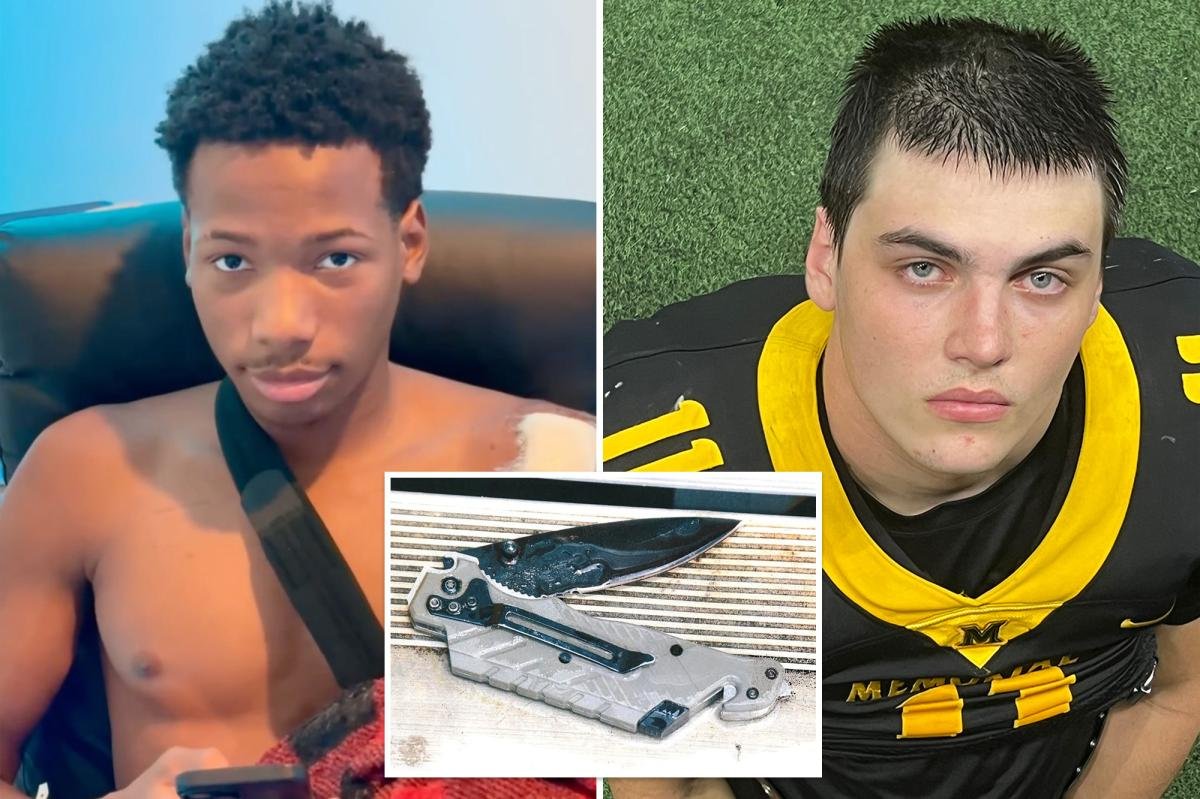
The motion for a new trial remains pending. The original trial judge has been recused from the appellate proceedings.
Whether the off-the-record agreement and the exclusion of this material will be deemed grounds for a new trial is now a question for the court.
What is no longer in dispute is that the jury that decided Anthony’s fate never saw the 20-plus pages of records the defense has now placed on the public record.
The revelations arrive in a case that has already been marked by intense online polarization, competing narratives, and grief on both sides.
Austin Metcalf is ᴅᴇᴀᴅ. Karmelo Anthony is serving a 35-year sentence.
The families of both young men continue to live with the consequences of a few violent seconds under a yellow tent on a rainy April morning.
The newly disclosed documents do not rewrite those facts.
They do, however, force a re-examination of whether the trial that produced the conviction was as complete as the justice system requires.
For those who followed the original proceedings, the picture of Austin Metcalf that emerged in court was that of a popular athlete and honor student.
The picture that has now emerged from sealed juvenile and school records is considerably more complicated.
Whether that fuller picture would have changed the outcome of the trial is the central question the defense is asking the court to answer.
The answer will determine whether Karmelo Anthony receives a second chance to present his case with the complete evidentiary record, or whether the original verdict stands.
In the meantime, the public is left with a clearer, if more uncomfortable, understanding of the two teenagers whose lives collided under that tent.
One is gone. The other is in prison.
And the records that were kept from the jury are now part of the permanent public conversation surrounding both.